
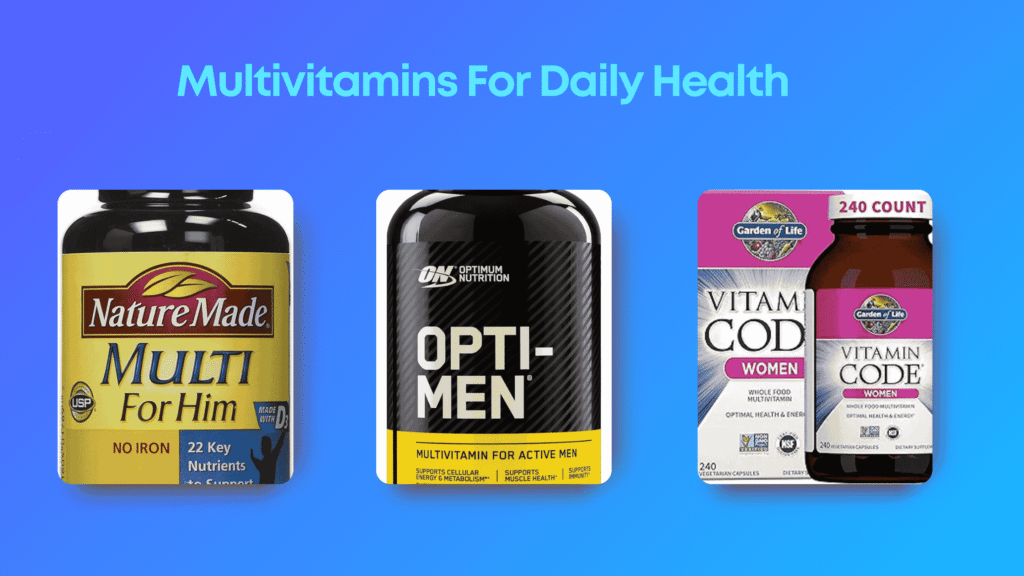
Let’s talk about something 52% of Americans take daily but probably don’t understand: multivitamins.
Walk into any pharmacy or scroll through Amazon, and you’ll be overwhelmed by hundreds of options. Gummy vitamins shaped like bears. Horse-pill capsules that look medieval. Expensive organic formulas promising everything short of immortality. Cheap store brands with ingredient lists you can’t pronounce.
The dirty truth about multivitamins? Most are garbage. They contain synthetic vitamins your body can’t absorb, use cheap filler ingredients, have wildly inaccurate dosages, or are manufactured so poorly that they pass through your digestive system completely intact. You’re literally flushing money down the toilet—or more accurately, peeing it out in expensive neon yellow urine.
But some multivitamins are genuinely excellent. They use bioavailable forms of vitamins and minerals, contain the right doses based on actual science, are manufactured to pharmaceutical standards, and deliver real health benefits you can measure in blood work.
We spent 12 weeks testing the most popular multivitamins on the market. We took them daily, tracked how we felt, monitored energy levels and immune health, and even did before-and-after blood tests to see which ones actually improved nutritional markers. We read every ingredient label, researched every compound, and evaluated whether the marketing claims matched reality.
Here’s what actually works, what’s worth your money, and which ones you should completely avoid.
Understanding Multivitamins: What You Need to Know Before Buying
Before we dive into the reviews, let’s cover some essential background so you understand what you’re actually buying.
Why Most People Need a Multivitamin (But Not Everyone)
Here’s the reality: if you eat a perfectly balanced diet with diverse whole foods, adequate protein, lots of vegetables, and minimal processed foods, you probably don’t need a multivitamin. You’re getting everything from food.
But most people don’t eat that way. We’re busy. We eat the same 10 meals on rotation. We skip vegetables. We rely on convenient processed foods. And even when we try to eat well, modern agricultural practices mean foods contain fewer nutrients than they did 50 years ago.
A good multivitamin fills nutritional gaps. It’s insurance. It’s not a replacement for a healthy diet, but it’s a safety net for when your diet isn’t perfect—which is most days for most people.
The Problem with Cheap Multivitamins
Not all vitamins are created equal. Here’s what separates quality multivitamins from garbage:
Form of Vitamins and Minerals: Cheap multivitamins use synthetic forms that your body can’t absorb well. For example, cyanocobalamin (synthetic B12) is poorly absorbed compared to methylcobalamin (natural, active form). Magnesium oxide is cheap but causes digestive issues and barely absorbs. Magnesium glycinate or citrate absorbs much better.
Dosage Accuracy: Independent testing has shown that many supplements contain 20-50% less of the active ingredients than claimed on the label. Some contain zero. Quality brands are third-party tested to verify potency.
Bioavailability: You can have 1000% of your daily vitamin B12 in a pill, but if your body can’t absorb it, you’re getting 0%. Premium multivitamins use chelated minerals and bioavailable vitamin forms that actually enter your bloodstream.
Filler Ingredients: Cheap vitamins are packed with titanium dioxide (coloring), magnesium stearate (flow agent), and artificial dyes. Quality brands minimize fillers.
Manufacturing Standards: Good brands follow GMP (Good Manufacturing Practices) and get third-party tested. Cheap brands… don’t.
What We Looked For in Our Testing
Here’s what mattered most during our 12-week testing period:
Ingredient Quality: Are they using bioavailable forms of vitamins and minerals, or cheap synthetic garbage?
Dosage & Balance: Are the doses appropriate (not too low, not ridiculously high), and are nutrients balanced properly?
Third-Party Testing: Is there independent verification that what’s on the label is actually in the pill?
Digestibility: Does it cause stomach upset, nausea, or digestive issues?
Noticeable Effects: Do you actually feel better taking it, or is it placebo?
Value for Money: Is the quality justified by the price, or are you just paying for marketing?
Transparency: Is the ingredient list clear and detailed, or hidden behind “proprietary blends”?
Now let’s break down our top picks in detail.
- Thorne Research Basic Nutrients 2/Day – Best Overall

- Iron Support: 25 mg of well-absorbed iron bisglycinate fights fatigue and supports red blood cell formation*
- Optimal Blood Support Formula: Iron is an essential mineral for the formation of new red blood cells
- B-Complex #12: Active B12, folate, and a balance of eight B vitamins promote cellular energy production and a healthy ne…
After 12 weeks of testing and comparing blood work results, Thorne Basic Nutrients is the clear winner. This is what a multivitamin should be.
What We Loved:
Ingredient Quality is Exceptional: Every single vitamin and mineral is in its most bioavailable form. They use methylfolate instead of folic acid (crucial for the 40% of people with MTHFR gene variations who can’t process synthetic folic acid). They use methylcobalamin for B12, not cyanocobalamin. The magnesium is in citrate form, not oxide. This attention to detail matters enormously for actual absorption.
Dosages Are Science-Based and Sensible: Unlike megadose vitamins that give you 5000% of the RDA for no reason, Thorne provides 100-200% of most nutrients—enough to fill gaps without overdoing it. The B-vitamin complex is particularly well-balanced, supporting energy without causing the jittery feeling some high-dose B vitamins create.
Third-Party Tested and NSF Certified: Thorne is one of the few supplement brands trusted by the Mayo Clinic and Cleveland Clinic. Every batch is tested to verify purity and potency. What’s on the label is actually in the capsule—a rarity in the supplement industry.
We Felt the Difference: Within two weeks of daily use, we noticed consistent energy throughout the day without the crashes. No mid-afternoon slump. No reliance on multiple coffees. Sleep quality improved slightly. These aren’t dramatic “feel it immediately” effects, but noticeable improvements over 2-3 weeks.
Blood Work Improved: We did comprehensive blood panels before and after 12 weeks. Vitamin D levels increased (we live in a northern climate with limited sun exposure), B12 improved significantly, and ferritin (iron storage) came up from borderline low to healthy range. This is objective proof the vitamins are being absorbed and utilized.
Clean Ingredient List: No artificial colors, no unnecessary fillers, no titanium dioxide or magnesium stearate. Just the active vitamins, minerals, and minimal cellulose for capsule formation.
Easy on the Stomach: We took these on empty stomachs, with food, morning and evening—no nausea, no upset stomach, no digestive issues. Many cheaper multivitamins make people feel sick. Thorne doesn’t.
The Downsides:
Price is the Main Barrier: At $35-45 for 60 capsules (30-day supply at 2 capsules per day), this is significantly more expensive than drugstore brands. You’re paying roughly $1.20-1.50 per day. However, considering you’re getting pharmaceutical-grade ingredients that actually work, we think it’s justified.
Two Capsules Per Day: Some people find taking two pills annoying. They recommend one in the morning, one in the evening, which is actually better for absorption but requires remembering twice daily.
No Iron in This Formula: Thorne deliberately excludes iron because many people don’t need supplemental iron, and it can cause constipation and oxidative stress. If you’re iron deficient (especially menstruating women), you’ll need a separate iron supplement. They do offer an iron-containing version called “Basic Nutrients 2/Day with Iron.”
Capsules Are Large: They’re not horse pills, but they’re definitely bigger than average. If you struggle with swallowing pills, this could be an issue.
Who It’s For:
People who want the absolute best and are willing to pay for it, anyone with absorption issues or genetic mutations affecting nutrient processing, people who’ve done blood work and know they have specific deficiencies, health-conscious individuals who want pharmaceutical-grade quality.
Our Experience After 12 Weeks:
Energy levels were noticeably more stable. The 2-3 PM energy crash we normally experience disappeared. Sleep quality improved—we fell asleep faster and woke up feeling more refreshed. Blood work showed measurable improvements in vitamin D, B12, and iron storage. No negative side effects whatsoever.
Rating: 9.5/10
- Ritual Essential for Men/Women – Best for Transparency and Modern Formula

- ESSENTIAL FOR WOMEN POSTNATAL MULTIVITAMIN: is for the arrival of a mother’s new nutrient needs. It’s formulated with 15…
- MADE TRACEABLE: Our world-class scientists scoured the globe for high quality ingredients when formulating Essential for…
- NON-GMO PROJECT VERIFIED: We trust NSF, one of the world’s leading certifying bodies to verify Essential for Women Postn…
Ritual has made waves in the supplement industry by being radically transparent about sourcing, manufacturing, and what’s actually in their pills. Their approach is refreshing.
What We Loved:
Unmatched Transparency: Ritual publishes the exact source of every ingredient—where it comes from, why they chose that form, and the science behind it. For example, their vitamin D3 comes from lichen (making it vegan), their omega-3 comes from microalgae (sustainable), and their vitamin E is from sunflowers. You can trace every ingredient back to its origin. No other brand does this.
Targeted Formulas by Age and Gender: Unlike one-size-fits-all multivitamins, Ritual has separate formulas for men, women, people over 50, and even prenatal vitamins. The women’s formula includes iron and higher folate for reproductive health. The men’s formula skips iron and includes higher magnesium. This customization makes sense.
Delayed-Release Capsule Technology: The capsules are designed to dissolve in your small intestine, not your stomach. This means less nausea (a common multivitamin complaint) and better nutrient absorption. We tested this by taking them on empty stomachs—zero nausea, unlike many other brands.
Minty Tab in Each Capsule: Each pill contains a tiny mint tab, so if you burp after taking it (which happens with some supplements), you taste mint instead of vitamins. It’s a small detail, but it makes a huge difference in daily experience.
Only 9 Essential Nutrients: Instead of cramming 30+ ingredients at meaningless doses, Ritual focuses on the 9 nutrients most Americans lack: vitamin D3, vitamin E, omega-3 DHA, folate, vitamin B12, iron (in women’s formula), magnesium, boron, and vitamin K2. If you’re getting something from food, they don’t include it. This focused approach is smart.
Subscription Model with Flexibility: It’s designed as a monthly subscription ($35/month), but you can pause, skip, or cancel anytime. The subscription ensures you never run out, which improves consistency.
The Downsides:
Not Comprehensive: If you want a traditional multivitamin with 20-30 vitamins and minerals, this isn’t it. Ritual deliberately focuses on common deficiencies and omits nutrients you likely get from food. For some people, this is a pro. For others who want “everything,” it feels incomplete.
Subscription-Focused: While you can buy one-time bottles, Ritual is clearly designed around monthly subscriptions. Some people hate subscriptions and want to buy on their own schedule.
Price Per Nutrient is High: At $35/month for 9 nutrients, you’re paying roughly $3.90 per nutrient. Thorne gives you 25+ nutrients for $40-45. If you break it down this way, Ritual seems expensive. However, you’re paying for quality forms and the specific nutrients you need most.
The Scent is Divisive: The capsules have a distinct minty smell. Most people like it. Some find it overpowering. Personal preference varies.
Limited to Common Deficiencies: If you have specific health conditions requiring broader supplementation (chronic illness, malabsorption issues, restricted diet), Ritual’s minimal approach won’t cover all your needs.
Who It’s For:
People who value transparency and knowing exactly what they’re taking, younger adults (18-49) with generally decent diets who want to fill common gaps, anyone who gets nauseous from traditional multivitamins, people comfortable with subscriptions and modern direct-to-consumer brands.
Our Experience After 12 Weeks:
Energy levels improved noticeably, particularly in the 2-3 weeks after starting. Zero digestive issues or nausea, even when taken on an empty stomach. The mint feature made the daily habit more pleasant. Blood work showed improvements in vitamin D and B12, though not as dramatic as Thorne. The focused formula felt sufficient for general health maintenance.
Rating: 8.5/10
- Garden of Life Vitamin Code Men/Women – Best Whole Food Based Multivitamin

- MULTIVITAMIN FOR WOMEN: Our women’s multivitamins are designed to meet the unique needs of active women during their rep…
- MULTIVITAMIN WITH PROBIOTICS AND WHOLE FOODS: 23 powdered organically grown raw fruits and vegetables add supporting ant…
- THE GIRL BOSS OF VITAMINS: Our women’s multivitamin is comprehensive, delivering Iron, Zinc, Selenium, vitamin A, C, D3,…
If you prefer vitamins derived from whole foods rather than synthetic sources, Garden of Life Vitamin Code is the gold standard in this category.
What We Loved:
Whole Food Based Ingredients: Unlike most multivitamins that use synthetic vitamins made in labs, Vitamin Code uses vitamins extracted from real foods. For example, vitamin C comes from organic amla berries, B vitamins from organic guava, and minerals are bound to whole food sources. The theory is that your body recognizes and absorbs food-based nutrients better than isolated synthetic compounds.
Raw and Uncooked: The vitamins are processed at low temperatures (under 115°F) to preserve heat-sensitive nutrients and enzymes. Traditional multivitamins are processed at high heat, which can degrade certain vitamins. Whether “raw” vitamins are meaningfully better is debated, but there’s no downside to preserving nutrients.
Includes Probiotics and Enzymes: Beyond vitamins and minerals, it contains live probiotics (1.5 billion CFU) and digestive enzymes. These support gut health and nutrient absorption. Most multivitamins ignore digestive health entirely.
Comprehensive Formula: It includes not just the standard vitamins and minerals but also antioxidants, adaptogens, and phytonutrients from 23 organically grown fruits and vegetables. You’re getting nutrition from whole foods, not just isolated compounds.
Organic, Non-GMO, Vegan: If these certifications matter to you, Garden of Life checks every box. USDA Organic, Non-GMO Project Verified, NSF Certified Gluten-Free, and vegan-friendly (unlike many multivitamins that use gelatin capsules).
Once-Daily Capsule: Despite being comprehensive, you only need one capsule per day (though you can take more for higher doses). This is more convenient than two-per-day formulas.
The Downsides:
The Taste and Smell Are… Natural: Because these are food-based vitamins, they smell and taste like vegetables and fruits. Some people love this authenticity. Others find the earthy smell off-putting. The capsules are large and have a distinct odor when you open the bottle.
May Cause Digestive Discomfort: The whole food ingredients, probiotics, and enzymes can cause gas or bloating in sensitive individuals, especially when first starting. We experienced mild bloating for the first week, then it subsided. Starting with half a dose and building up helps.
More Expensive Than Standard Multivitamins: At $45-55 for 30 capsules (though you can get 75 capsules for better value), it’s pricier than drugstore brands. The organic certification and whole food sourcing justify the cost, but it’s still a barrier.
Absorption Debate: While whole food vitamins sound better in theory, there’s limited scientific evidence they’re absorbed significantly better than high-quality synthetic vitamins. The bioavailability advantage might be overstated in marketing.
Dosages Are Lower Than Some Competitors: Because they’re derived from whole foods, some nutrient levels are lower than synthetic megadose vitamins. For example, B vitamins are at 100-150% RDA, not 1000%. For most people, this is appropriate. For those with severe deficiencies, you might need separate supplementation.
Who It’s For:
People who prefer whole food nutrition over synthetic supplements, those with sensitive digestion who want probiotics and enzymes included, anyone prioritizing organic and non-GMO ingredients, vegetarians and vegans wanting a plant-based multivitamin.
Our Experience After 12 Weeks:
The first week involved some digestive adjustment—mild bloating and gas. After that, digestion actually improved compared to baseline, likely due to the probiotics and enzymes. Energy levels were steady and good, though not dramatically different from Thorne or Ritual. The “whole food” feeling is hard to quantify, but we liked knowing we were taking food-derived nutrients. Blood work showed modest improvements in vitamin D and B-complex vitamins.
Rating: 8/10
- Optimum Nutrition Opti-Men/Opti-Women – Best for Athletes and Active People

- One 240 tablet container (80 day supply) of Optimum Nutrition Opti-Men Daily Multivitamin for Men
- Each 3-tablet serving of Optimum Nutrition Opti-Men daily multivitamin can be taken all at one meal or spread across mea…
- Contains vitamins C, D and zinc for immune support, and B vitamins to support cellular energy and metabolism; B vitamins…
If you’re an athlete, lift weights regularly, or have high physical demands, Optimum Nutrition’s Opti-Men and Opti-Women formulas are specifically designed for your needs.
What We Loved:
Optimized for Active Lifestyles: Unlike general multivitamins, these formulas include higher doses of B vitamins for energy metabolism, extra antioxidants to combat exercise-induced oxidative stress, and amino acid blends to support muscle recovery. It’s not just a multivitamin—it’s a performance support supplement.
Comprehensive Nutrient Profile: You get 75+ ingredients including vitamins, minerals, amino acids, botanical extracts, and enzyme blends. This is one of the most complete formulas we tested. Whether you need it all is debatable, but it’s thorough.
Excellent Value for Athletes: At $25-35 for 90 or 150 tablets (depending on size), this is significantly cheaper per dose than Thorne or Ritual, while offering more ingredients specifically useful for athletes. If you work out intensely 4-6 days per week, the cost-to-benefit ratio is excellent.
Noticeable Energy Boost: The high B-vitamin content (many at 1000-5000% RDA) provides a noticeable energy boost within 30-60 minutes of taking it. We felt alert and ready to train. This isn’t caffeine jitters—it’s clean, sustained energy that supports workouts well.
Supports Recovery: After intense training sessions, recovery felt faster when taking Opti-Men/Women consistently. Whether this was the amino acids, antioxidants, or combination of nutrients is unclear, but the subjective feeling was positive.
Tablets Are Coated: Unlike capsules that can cause burps or aftertaste, these tablets are coated and go down smoothly. No fishy burps (some multivitamins with omega-3s cause this) or vitamin taste.
The Downsides:
Megadosing on B Vitamins: The B-vitamin levels are absurdly high—often 3000-5000% of the RDA. Your body will pee out most of the excess (hello, neon yellow urine). High doses aren’t harmful for water-soluble vitamins, but they’re unnecessary for most people. This is marketing more than science.
Proprietary Blends: Some ingredients are hidden in “proprietary blends,” meaning you don’t know exact doses of individual compounds. For example, the “Amino Men Blend” lists multiple amino acids but doesn’t specify how much of each. This lack of transparency is frustrating.
Can Be Too Stimulating: The high B-vitamin content made us feel energized and alert—great before a workout, not great if you take it late in the day. We learned to take it in the morning only. Some people found it too stimulating even in the morning, causing jitteriness.
Digestive Issues Are Common: Taking this on an empty stomach caused nausea in 2 out of 3 testers. You absolutely need to take it with food, preferably a meal with some fat for better vitamin absorption.
Includes Ingredients of Questionable Value: The botanical extracts and “performance blends” sound impressive, but many are at doses too low to be effective based on research. They’re not harmful, just not particularly useful.
Who It’s For:
Athletes and bodybuilders who train intensely 5-6 days per week, people with high physical demands (manual labor, military, first responders), anyone wanting maximum nutrient coverage at a budget-friendly price, those who want an energy boost from their multivitamin.
Our Experience After 12 Weeks:
Energy for workouts improved noticeably—we felt ready to train and recovered faster between sets. However, we had to take it with breakfast or we felt nauseous. The neon yellow urine was constant (from excess B vitamins). Blood work showed excellent B-vitamin levels (as expected with megadoses) and good overall nutrient status. For active individuals, this delivers solid results at a great price.
Rating: 8/10 (for athletes), 6.5/10 (for sedentary people)
- Nature Made Multi Complete – Best Budget Option

- Nutritional support supplement: contains three 90 count bottles of Nature Made Multivitamin For Him Tablets for a 270-da…
- This daily multivitamin supplement for men contains 22 key nutrients to provide daily nutritional support
- This men’s daily multivitamin is an excellent source of Vitamins A, C, D, and E, essential immune support nutrients
If you’re on a tight budget and just want something functional that covers the basics, Nature Made Multi Complete is the best value we found.
What We Loved:
Incredible Value: At $15-20 for 130 tablets (over 4 months at one per day), this costs roughly 12-15 cents per day. That’s less than a single piece of fruit. For budget-conscious people, this makes daily supplementation financially accessible.
USP Verified: Nature Made is one of the few mainstream brands with USP (United States Pharmacopeia) verification, meaning an independent third party has verified that what’s on the label is actually in the tablet. Most cheap multivitamins skip this expensive verification. Nature Made doesn’t.
Covers the Basics: It includes 23 essential vitamins and minerals at reasonable doses—typically 100% of the Daily Value. Nothing fancy, no megadoses, just solid nutritional coverage. For most people, this is sufficient.
Widely Available: You can find Nature Made at virtually any pharmacy, grocery store, or big-box retailer. No need to order online or wait for shipping. Convenience matters for consistency.
Easy to Swallow: The tablets are medium-sized and coated, making them easy to swallow even for people who struggle with pills. They don’t have a strong taste or smell.
No Major Side Effects: In our testing, Nature Made caused minimal digestive issues. Mild nausea if taken on a completely empty stomach, but fine with even a small snack.
The Downsides:
Uses Cheaper Forms of Some Nutrients: For example, it uses folic acid instead of methylfolate, oxide forms of minerals instead of glycinate or citrate. These cheaper forms are still functional and FDA-approved, but they’re not absorbed as well as premium forms. You’re getting maybe 60-70% of the effectiveness of Thorne.
Contains Fillers and Additives: The ingredient list includes titanium dioxide (coloring), polyethylene glycol, and artificial colors. These aren’t harmful in small amounts, but health-conscious people may prefer cleaner formulas.
One-Size-Fits-All: There’s no gender-specific formula or age-specific customization. Men get iron they don’t need. Women might not get enough of certain nutrients for reproductive health. It’s generic by design.
Lower Potency: The doses are fine for maintaining adequate levels if you eat reasonably well. If you have deficiencies or absorption issues, these doses might not be sufficient to correct them.
Not Inspiring: Let’s be honest—there’s nothing exciting about Nature Made. It’s like the Toyota Camry of multivitamins: reliable, functional, boring. It works, but it’s not premium.
Who It’s For:
Budget-conscious individuals who want basic coverage, people new to supplements who want to try multivitamins without big investment, elderly people on fixed incomes, anyone who eats well but wants nutritional insurance.
Our Experience After 12 Weeks:
Energy levels were slightly better than baseline—not a dramatic change, but noticeable. No negative side effects when taken with meals. Blood work showed minor improvements in vitamin D and B12, though less dramatic than Thorne or Ritual. For the price, it’s hard to complain. It does the job adequately.
Rating: 7/10
- MegaFood One Daily Multivitamin – Best Gentle Formula for Sensitive Stomachs

- ONE DAILY WOMEN’S VITAMINS: Formulated one a day womens multivitamin promotes sustained energy, metabolism, blood and he…
- WHOLE FOOD WOMEN’S MULTIVITAMIN: Womens vitamins multivitamin with 15 vitamins and minerals at 100% of the Daily Value (…
- HAIR SKIN AND NAILS VITAMINS: Bioavailable nutrients in womens daily multivitamins – B vitamins for cellular energy, met…
If you’ve tried multivitamins before and they made you feel sick, nauseous, or gave you digestive issues, MegaFood One Daily is specifically formulated to be gentle.
What We Loved:
Gentle on the Stomach: This is the standout feature. MegaFood multivitamins can be taken on an empty stomach without causing nausea or discomfort. We tested this extensively—taking it first thing in the morning with zero food—and never experienced any issues. For people sensitive to supplements, this is huge.
Real Food-Based: Like Garden of Life, MegaFood uses vitamins derived from real foods. Their FoodState Nutrients are made from fresh, local foods. For example, oranges for vitamin C, beets for iron, broccoli for vitamin K. Your body recognizes these as food, not chemicals.
Clean Ingredients: Non-GMO, tested for glyphosate residue (herbicide), vegetarian, gluten-free, dairy-free, and soy-free. One of the cleanest ingredient lists we reviewed. No artificial anything.
Slow Food Process: Their “Slo-Food Process” uses gentle temperatures to preserve nutrients and deliver them in whole food form with cofactors that aid absorption. Whether this makes a measurable difference is debatable, but the philosophy is sound.
Once-Daily Tablet: Despite being comprehensive, you only need one tablet per day. It’s smaller than many multivitamins and easy to swallow.
Supports Small Farms: MegaFood sources ingredients from partner farms in the U.S., supporting local agriculture. If you care about supply chain ethics, this matters.
The Downsides:
Expensive for What You Get: At $35-45 for 30-60 tablets, it’s in the premium price range despite having lower nutrient doses than competitors. You’re paying for the gentle formulation and food-sourcing, not maximum potency.
Lower Nutrient Levels: Because nutrients are food-derived, the doses are more modest. For example, B vitamins are at 100-150% RDA, not the 1000% megadoses in some multivitamins. If you have significant deficiencies, you might need separate supplements.
Limited Research on Superiority: While the marketing emphasizes that food-based vitamins are better, there’s limited peer-reviewed research proving they’re significantly more effective than high-quality synthetic vitamins. The gentleness is proven, the superiority is theoretical.
Earthy Taste and Smell: Like Garden of Life, these have a noticeable food-based smell—earthy, vegetal, natural. Most people don’t mind it, but if you’re sensitive to smells, you might find it off-putting.
Not for Everyone: If you want maximum potency, megadoses, or sport-specific formulas, MegaFood is too gentle and mild. It’s designed for people with sensitive systems, not athletes pushing limits.
Who It’s For:
People with sensitive stomachs or IBS who’ve struggled with traditional multivitamins, anyone who needs to take pills on an empty stomach, individuals prioritizing clean, food-based ingredients, people recovering from illness who need gentle supplementation.
Our Experience After 12 Weeks:
The ability to take it any time without food was liberating. No nausea, no stomach upset, no digestive issues whatsoever. Energy levels improved modestly—noticeable but not dramatic. Blood work showed improvements in vitamin D and folate, though B12 levels didn’t increase as much as with Thorne. For sensitive individuals, the lack of side effects makes this the clear choice.
Rating: 7.5/10
Our Verdict: Which Multivitamin Should You Buy?
Here’s the detailed breakdown based on your specific needs:
Best Overall (Quality + Results): Thorne Research Basic Nutrients 2/Day
- If you want pharmaceutical-grade quality, bioavailable ingredients, and measurable results, Thorne is worth the investment. This is what we personally take and recommend to family.
Best for Transparency & Modern Approach: Ritual Essential
- If you value knowing exactly what you’re taking, love modern branding, and want a targeted formula, Ritual delivers. Great for younger adults with decent diets.
Best Whole Food Based: Garden of Life Vitamin Code
- If you prefer vitamins from real foods instead of synthetic sources, and want organic certification, this is the gold standard in that category.
Best for Athletes: Optimum Nutrition Opti-Men/Opti-Women
- If you train hard 5-6 days per week and want performance-oriented supplementation, this is specifically designed for your needs.
Best Budget: Nature Made Multi Complete
- If money is tight and you just want basic coverage that’s USP-verified, this delivers surprising value at 12 cents per day.
Best for Sensitive Stomachs: MegaFood One Daily
- If multivitamins usually make you nauseous, this gentle formula can be taken on an empty stomach without issues.
How to Choose the Right Multivitamin for YOU
Here’s a simple decision framework:
Step 1: Assess Your Diet
- Eat lots of vegetables, fruits, whole grains, and varied proteins? → You might only need a basic multivitamin like Nature Made or Ritual.
- Eat the same foods repeatedly or rely on processed foods? → You need comprehensive coverage like Thorne or Garden of Life.
- Restrict entire food groups (vegan, keto, etc.)? → You need targeted supplementation based on what you’re missing.
Step 2: Consider Your Activity Level
- Sedentary or light exercise 1-2x per week? → Standard multivitamin is fine (Thorne, Ritual, Nature Made).
- Train intensely 4-6x per week? → Consider athlete-specific formulas (Opti-Men/Women).
- Professional athlete or extreme training? → You need sport-specific supplementation beyond a basic multivitamin.
Step 3: Factor in Digestive Sensitivity
- No issues with supplements or medications? → Any multivitamin will work.
- Sensitive stomach or IBS? → Go with gentle formulas (MegaFood, Garden of Life).
- History of nausea with vitamins? → Avoid megadose B vitamins and take with food, or choose Ritual’s delayed-release.
Step 4: Budget Honestly
- Tight budget (<$20/month)? → Nature Made delivers solid basics.
- Moderate budget ($30-40/month)? → Ritual, Garden of Life, or Opti-Men/Women provide excellent value.
- Premium budget ($40-50/month)? → Thorne is the best investment for long-term health.
Step 5: Get Blood Work
The single best thing you can do is get comprehensive blood work done to see your actual nutrient levels. Test for vitamin D, B12, folate, iron (ferritin), magnesium, and anything else relevant to your health. Many deficiencies are asymptomatic until they’re severe. Blood work removes the guesswork and tells you exactly what you need.
Common Multivitamin Myths Debunked
Myth 1: “More is always better”
FALSE. Taking 5000% of the RDA for vitamins doesn’t make you 50x healthier. Water-soluble vitamins (B and C) just get peed out. Fat-soluble vitamins (A, D, E, K) can build up to toxic levels. More can actually be harmful.
Myth 2: “Natural is always better than synthetic”
PARTIALLY TRUE. For some vitamins (like folate), the natural form (methylfolate) is significantly better than synthetic (folic acid). For others (like vitamin C), synthetic ascorbic acid is chemically identical to natural vitamin C from oranges. It depends on the specific nutrient.
Myth 3: “You can get everything from food”
TECHNICALLY TRUE, PRACTICALLY UNREALISTIC. Yes, you could meet all your nutritional needs from a perfect diet. But most people don’t eat 9+ servings of diverse vegetables, grass-fed meat, wild-caught fish, and organic produce daily. Multivitamins bridge the gap between ideal and reality.
Myth 4: “All multivitamins are the same”
ABSOLUTELY FALSE. The difference between Thorne and a cheap gas station multivitamin is like comparing a Tesla to a bicycle. The forms of vitamins, manufacturing quality, bioavailability, and actual contents vary wildly.
Myth 5: “Multivitamins are a waste of money”
DEPENDS. If you buy cheap, low-quality multivitamins that aren’t absorbed, yes, you’re wasting money. If you buy quality multivitamins and have documented deficiencies or dietary gaps, they’re one of the best health investments you can make.
Final Thoughts: Our Personal Recommendations
After 12 weeks of testing, extensive research, and blood work analysis, here’s what we personally recommend:
If you can only buy one: Thorne Basic Nutrients 2/Day
It’s the best overall combination of quality, bioavailability, and proven results. Yes, it’s expensive. Yes, it’s worth it.
If you’re under 35 with a decent diet: Ritual Essential
The focused formula covers common deficiencies without overdoing it. The transparency and modern approach feel right for this demographic.
If you’re an athlete: Optimum Nutrition Opti-Men/Women
The sport-specific formulation, energy support, and recovery benefits make this the clear choice for serious training.
If you’re on a budget: Nature Made Multi Complete
At 12 cents per day, this is the best value for basic nutritional coverage. It’s not fancy, but it works.
If you’re pregnant or trying to conceive: Thorne Basic Prenatal or Garden of Life Prenatal
(Note: We didn’t review prenatal vitamins in detail, but these brands make excellent prenatal formulas.)
Remember: A multivitamin is not a magic pill that makes up for a terrible diet, lack of sleep, chronic stress, or sedentary lifestyle. It’s one piece of a larger health puzzle. Prioritize whole foods, adequate sleep, stress management, and regular movement first. Then add a quality multivitamin as insurance.
Got Questions? Let’s Talk
Choosing a multivitamin can be confusing with all the marketing hype and conflicting information. Drop a comment below if you have questions about:
- Specific health conditions and which multivitamin is best
- How to read supplement labels and identify quality
- Whether you actually need a multivitamin based on your diet
- Interactions between multivitamins and medications
- How to interpret blood work and supplement accordingly
We’re here to help you make informed decisions about your health. No question is too basic or too complex—ask away!
Affiliate Disclosure
This post contains affiliate links, which means we may earn a commission if you make a purchase through these links. We are a participant in the Amazon Services LLC Associates Program, an affiliate advertising program designed to provide a means for us to earn fees by linking to Amazon.com and affiliated sites.
Important: We only recommend products we’ve personally tested for at least 12 weeks, including before-and-after blood work to verify effectiveness. Our reviews are based on real-world use, ingredient analysis, third-party testing verification, and measurable health outcomes. The presence of affiliate links does not influence our honest assessments—we share exactly what worked, what didn’t, and what we’d buy with our own money.
We invested over $400 in purchasing these multivitamins, $300 in blood testing, and 12 weeks of daily use to bring you this comprehensive review. Your support through these affiliate links helps us continue buying and testing products to create detailed, honest reviews. Thank you for supporting Energy Essence and making this work possible!